Binocular Reviews Home > Spotting Scopes
 |
 |
My initial interest in optics strictly revolved around binoculars, but it was not long after I got seriously into birdwatching and trying to take photos of birds, that I decided that I should get myself a spotting scope and try my hand at digiscoping.
I now often get asked should I get a binocular or a scope and my answer for most people is both!
The aim of both is to get you a closer view of a distant object and basically a scope is half a binocular, but apart from that the way you use them and each of their unique strengths and weaknesses are quite different. So rather than competing, they do a great job of complimenting each other in a similar way to a pair of good astronomy binoculars compliments an astro telescope.

Very Small Spotting Scopes (and Binoculars) for Hiking, Camping, Backpacking & Bikepacking
An in-depth article on the thought process that I went through and the main features and specifications that I kept in mind when choosing my particular Compact Binocular & Spotting Scope combination for a couple of Backpacking, Bikepacking and Camping adventures that I was busy planning for.
Also includes alternative options as well as other advice on compact scopes and binoculars.
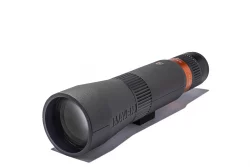 Maven has expanded its CS.1 spotting scope lineup to offer a new straight version called the CS.1S in addition to the original angled version in the CS.1A.
The new model is built on the same pedigree as the original CS.1A, as well as the brand's other C Series optics, which makes it a great choice for birders, wildlife viewers, and other outdoor enthusiasts who want to be able to locate and follow faster moving objects more easily.
Considering the quality of the body and optics underneath, the price tag of $800 looks to be excellent value.

$840 $1,050
The 12x - 27x 56mm (34oz) Maven S.2 is an ultra lightweight, packable spotting scope specifically designed to maximize performance while minimizing size and weight

New: Join me on the BBR YouTube Channel for the unboxing & first impressions of the Hawke Endurance ED 15-45x60 Spotting Scope.
 Ultra-compact, very lightweight spotting scope with good quality optics, sensible zoom magnification range and relatively large (for a compact) 56mm objective lens make for a bright, high-quality image that you can take with you just about anywhere.
Other highlights include a fully water and fog proof body, removable zoom eye-piece that incorporate twist-up eyecups with a good level of eye-relief for use with or without glasses.
The maximum field of view you get with the included zoom eyepiece at 9x power is extremely wide for a spotting scope and is ideal for those wanting to quickly lock onto an object, especially if it is moving (birds aeroplanes etc.)
This scope also has and ultra close minimum focus distance of only 2 meters (6.6ft) making it great for observing objects like butterflies on flowers or birds on a nearby feeder.
I also found that at the lower magnifications thus was also a very easy scope to use for digiscoping in good light conditions.
 This mid-to-high end scope from Hawke Sport Optics combines a very high level of optics and a reasonably compact, lightweight housing to produce a scope that I feel offers an excellent balance between image brightness, quality and being travel friendly and easy to carry about.
Highlights include ED glass elements in the 60mm objective lens, a wide range and very high quality 15-54x zoom eyepiece with plenty of eye-relief and which delivers both a wide field of view and an excellent minimum focussing distance.
Hawke uses fully multi-coated optical system, Bak-4 Porro prisms for image correction and has the very best dielectric mirror coatings on the prism directing the light to the angled eyepiece and thus ensures as much light that is captured by the lens gets transmitted right through to your eyes.
 Costing around $399 / £320 / €340 this is an excellent value for money mid-level spotting scope that performs well above its price range.
Highlights include a large 80mm lens and versatile 20x to 60x zoom eyepiece that offers a wide field of view at lower magnifications and the great image detail at higher settings.
This Bresser scope has a good minimum focus, making it a great option of the detailed study or digiscoping of flowers and the insects on them as well as birds on nearby feeders for example.
There is plenty of eye-relief and a good quality twist-up eyecup making this a good choice of scope for eyeglass wearers. The body is fully waterproof body and comes with a dual-speed focus wheels. Other features include a low weight and compact dimensions for an 80mm spotting scope as well as excellent image quality and brightness.

High End Scopes (> $500 / £500)
Below are some of my most recent reviews of high quality, high end instruments that cost more than $500 / £500 and are aimed at serious observers and digiscopers:
 Features like a large 80mm triple element APO lens with ED glass, fully multi-coated optics protected by a fully sealed body that is filled with nitrogen gas to prevent misting up of the internal glass surfaces ensure that this Snypex scope has all the pieces in place to potentially deliver a bright and high resolution view to please even the most experienced users.
To see if all these high end components and features would come together and deliver on the promise, I spent a few weeks using, testing and digiscoping with the Snypex Knight T80 ED APO Spotting Scope and now you can read my honest thoughts and opinions in the full review on our sister BSSR site.
 Make no mistake, this Hawke Spotting Scope is a very high quality optical instrument, but rather incredibly comes at a price that is much more affordable than you might think.
Top spec features include a very lightweight magnesium body that is also fully waterproof. The Endurance ED has dual focus knobs and is boxed with a 20-60x zoom eyepiece included, but which can also be removed and exchanges for others should you need to.
Optics are fully multi-coated, which along with the large 85mm objective lens and a dielectric mirror coated BaK-4 prism, ensure that not only is plenty of light captured, but the transmission levels are extremely high making for one of the best quality and brightest images I have ever seen.
Also included is an extendible sunshield, adjustable collar for body rotation and a very well made stay-on soft scope cover for complete protection, even when using the scope.
 Winner of the BBR Award for the Best Spotting Scope I reviewed in 2013, the 82mm angled version of the Vanguard Endeavor HD Spotting Scope, is the companies most advanced device they have ever produced.
Optical features include fully multi-coated optics, phase corrected, BaK-4 glass roof prisms and an ED glass objective lens that almost gets rid of color fringing all together, this scope delivers a fantastic quality image.
This high end scope, with a mid-high level price tag has a magnesium chassis that is 100% fog and waterproof and comes with duel focus wheels, a removable 20x-60x zoom eyepiece and a built-in sunshield.
To see how it performed, please take tome to read my review which is published on my Best Spotting Scope Reviews website.
 With it's super large and high quality 100mm air-spaced doublet achromatic objective lens with a fluorite extra low dispersion glass (ED) element, the Celestron Regal F-ED Spotting scope has the potential to be able to produce an extremely bright as well as high quality image.
I tested the angled version of this Celestron spotting scope, that like many of the best uses a dual speed focussing mechanism and comes with a versatile 22x-67x zoom eyepiece making this the ideal high end scope for general use, wildlife observation, birding and for target spotting.
The quality and brightness as well as the included T-Mount adapter for your SLR camera also makes a perfect for digiscoping.
 Aimed at serious birders, wildlife observation, target spotting and occasional astronomy, this top of the range, flagship Kowa spotting scope is part of their TSN-880 series of large 88mm diameter scopes and comes with all the components and coatings that you would expect to find and more.
This includes a very light as well as compact and waterproof magnesium body, pure fluorite crystal elements in their compound achromatic lenses designed to limit the effects of chromatic and spherical aberrations. As well as this, they have phase correction and highly reflective multi-coatings applied to the very best Schmidt-Pechan prisms available.
Mid Level & Low-Cost Spotting Scopes (< $500 / £500)
The reviews below are of less expensive scopes aimed at those with a tighter budget, but still looking or a high performance scope:
Costing around $399 / £320 / €340 this is an excellent value for money mid-level spotting scope that performs well above its price range.
Highlights include a large 80mm lens and versatile 20x to 60x zoom eyepiece that offers a wide field of view al lower magnifications and the great image detail at higher settings.
This Bresser scope has a good minimum focus, making it a great option of the detailed study or digiscoping of flowers and the insects on them as well as birds on nearby feeders for example.
There is plenty of eye-relief and a good quality twist-up eyecup making this a good choice of scope for eyeglass wearers. The body is fully waterproof body and comes with a dual-speed focus wheels. Other features include a low weight and compact dimensions for an 80mm spotting scope as well as excellent image quality and brightness.
 With it's 50mm objective lens and compact, lightweight water and fogproof body there is no doubting the potential this Hawke spotting scope has as an ideal easily portable or travel friendly companion.
Add to this some really high end optics that are fully multi-coated and a removable 12x-36x zoom eyepiece and a really close short focus then you have a very versatile instrument, perfectly suitable for a wide range of applications.
For much more detail and my thoughts on all aspects of this great little spotter, please take a look at my full review.
 This fantastically small and lightweight travel scope from Opticron has to be one of the very best within it's size and price class anywhere.
I make no apologies for confessing that I really loved testing this scope and was blown away by the quality of the view. Sure it may not quite match a full sized scope in terms of low light capabilities which is perfectly understandable, but the quality of the image is second to none.
If you are in the market for a scope to take on holiday, or are just looking for one that is far easier to carry about in the field or at home, be that for birdwatching, wildlife observation or even hunting then I encourage to take some time to read my review.
 To be honest before it's arrival, I was not expecting much from the very low costing and compact Celestron LandScout 60mm Spotting Scope, but it really surprised me once I had tested it.
For such a low price you get a more than capable scope that is not only ideal for the novice, but also for those advanced users who are looking for a small back-up scope that they can take out when a full sized version is not required.
This Celestron scope comes with a table-top tripod, fully coated optics and highlights include a very wide field of view and a good looking, very well made body. Will perform well on your verandah looking out into the garden as well as as a lightweight and portable scope for birdwatching, hunting, hiking, camping. I think as a small scope to take to the archery/shooting range this is also ideal for short to medium distances.
 This low cost scope from Levenhuk is a lot like many of their binoculars that I have reviewed in that whilst they obviously have to make sacrifices to keep the overall cost of the product down, they have been smart, keeping all the most important features to ensure that the image it delivers is as good as it gets within their price level and indeed as good as many that cost more.
This includes a large 90mm objective lens to capture more light and fully multi-coated optic that makes sure that as much of the extra light captured gets transmitted to your eyes as possible for a brighter better quality view.
The Levenhuk Blaze spotting scope also comes with a really good quality stay-on cover, a metal table-top tripod and the impressive lifetime Levenhuk warranty.
 Costing under $250 / £220, the 80mm Vanguard High Plains Spotting Scope comes with a surprising array of expensive components and coatings.
This begins with a lightweight magnesium body that is both water and fogproof, something that you rally don't often find in this price range.
Optical highlights include Bak-4 glass prisms and Fully multi-coated lenses.
What is more, with the scope, you get a pre-cut, foam-packed hard steel case, a soft rain and carry cover and a compact table top tripod with an adjustable pan head.
 Costing around £170, this Acuter Spotting Scope with it's tough waterproof body, large 80mm objective lens, a versatile 20x-60x (8-24mm) Zoom Eyepiece in my opinion, easily outperforms it's price tag.
Other highlights include fully multi-coated optics, a wide FOV and a good amount of eye-relief mean that this cheap scope is a great option for those after a good all round entry-mid level scope ideal for birding, general wildlife observation, target shooting and even a little casual astronomy.
For more, please take some time to read my full and in-depth review.
View All Spotting Scopes Reviews
 Discover what I feel are the top 5 reasons why a spotting scope is an essential tool for any outdoor enthusiast and why I feel they should be viewed as something to compliment your binoculars rather than being seen as an alternative to them.
From high magnifications to larger objective lenses, versatility, and performance, spotting scopes offer an experience that is different to which you get with a typical set of binoculars.
So whether you enjoy birdwatching, hunting, target shooting, or just observing the scenery, a spotting scope is a must-have item that will enhance your outdoor experience.
 Birding Scopes:
Whilst you can enjoy birds without a scope or you may even use a pair of binoculars, but if you have never looked at a bird through a pair of spotting scopes, you are in for a treat as the level of detail is simply incredible! But which pair is right for you, I review some of the best, cheapest, lightest, smallest, strongest birding scopes on the market and what features to look out for when choosing your equipment >> Choosing Birding & Birdwatching Scopes.
 This article is in response to a question I received from a reader and in it we take a look at just how effective a spotting scope can be for astronomy and just what considerations that you need to keep in mind when choosing a scope for occasional stargazing and what the main differences are between what is basically a refractor telescope designed for terrestrial use and ones that are designed for viewing the night sky.
As well as this, I give some recommendations on what I believe are some of the best wildlife and astronomy spotting scopes costing under $550 / £500.
 Window Clamp/Mount
Similar in concept to a tripod, except this time instead of three legs, your binoculars are attached to a steady base using a clamp.
As their name suggests, Vehicle window mounts easily turn your car into a mobile hide. But they are also versatile enough to attach your binoculars, spotting scope or camera to far more objects including railings, branches or even the deck rails at a hide.
 It s always good to get other peoples opinions, especially if they actually own and use the scope that you are interested in.
At Eagle Optics, they give their customers a section where they can rate and review the scopes that they have purchased.
In this section I have gone through all of them, grouping the best ones together so that you can quickly find the highest rated customer favorites on their site.

I was recently sent in a question from a person who was looking to get their first spotting scope, which they wanted to use mostly for digiscoping and for viewing wildlife.
They mentioned that they had read many reviews and had narrowed their shortlist down to two excellent scopes, the Celestron Regal M2 80ED and the Vanguard Endeavour HD 82A Spotting Scope, but could not choose between them.
So to help, I take a closer look at them both, compare their main features and decided which would be best for their needs.

In this guide I take you through the new modular system employed with the Swarovski ATX/STX Spotting Scopes.
In it I discuss in detail exactly how it works and what advantages it brings for general observation and for digiscopers.

One of the first questions you have to answer when deciding on a scope is to get an angled or straight through design.
In this article I look at the pros and cons of each to help you make the right choice for your needs.
 Swarovski Digiscoping
This guide takes you through the many ways and different combinations you can use to digiscope using Swarovski Spotting Scopes and adapters.
In it I take a look at the different options you have when using an SLR or compact camera as well as look in great detail at the choice of mounts and adapters to help you make the best choice. It also includes a number of sample digiscoped photographs for inspiration!
 Spotting Scope vs. Telescope
A lot of people ask what the difference is between a spotting scope and if they can use their scope for astronomy. In this article I take a look at the differences, the strengths and weaknesses of each and if you can effectively use a spotting scope to look at the stars and planets in the night sky.
 Waterproof Spotting Scopes
Spotting scopes designed for all weather conditions and environments must not only be tough, but waterproof as well. One of the most asked for features of a spotting scope is waterproofing which is often called ‘weather proofing’. Here’s my guide to: Waterproof Spotting Scopes
 I recently got the chance to try out the top of the range angled TSN-883 spotting scope from Kowa.
Part of the TSN-880 series of large 88mm diameter scopes, the 883, comes with a host of the highest quality features including a very lightweight magnesium housing that is as light and compact as many 60mm scopes.
The quality does not end with the body, as Kowa use the highest quality pure fluorite crystal lenses as part of their achromatic lens design to limit the effects of chromatic and spherical aberrations. On top of this they have a whole host of lens and prism coatings to ensure that the scope produces the best quality image possible.
 Unlike digiscoping where you are converting a spotting scope for the use of photography, the Kowa telephoto lens for super telephoto shooting (350mm, 500mm or 850mm), that can also be used as a spotting scope. This means that you can use this high-performance telephoto camera lens as a spotting scope as well. This is achieved by simply connecting it to the optional prism unit and eyepiece using a bayonet mounting system, making the switch between photography and observation a fairly quick simple operation.
What is more, the Kowa Lens/Scope is smaller, weighs less and is cheaper than the equivalent "standard" SLR telephoto lenses on the market. For more details:
Listed below is a selection of the most recent rebates, offers and major discounts on spotting scopes that I know about. If you know of any others that you think should be included in this section, please give me a shout.
As well as on their Endeavour binoculars, Vanguard also currently have a $50 mail-in rebate offer on all their Endeavor HD and XF scopes.
Available in 82mm or 65mm versions, the Endeavor HD is their most advanced scope and includes many structural and optical features that match the very best, including a waterproof magnesium body, twin speed focus wheels, ED glass lenses, fully multi-coated optics and phase corrected BaK-4 roof prisms.
The Endeavor XF is a cheaper version of the HD, that does not include the ED glass, but still features many other high end features that will suit those still looking for a great quality image, but who are on a tighter budget.
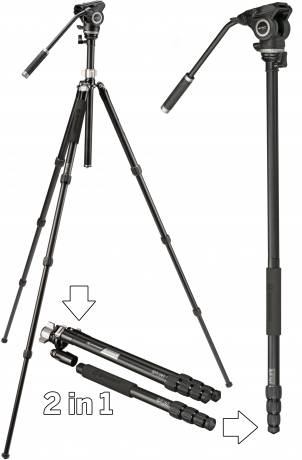 Made in Germany, the Bresser BX-5 PRO Tripod / Monopod with the liquid-mounted video head sells for around $169 / £159 / €160 which considering what you get and the level of workmanship makes this tripod that can also convert to a monopod well worth taking a closer look at for those looking to mount a spotting scope, large long distance or astronomy binocular or indeed a camera for photography/videography.
Main Features & Specifications
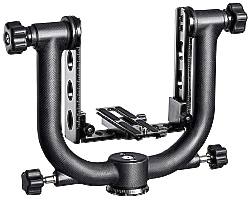 When it comes heavier, bulkier equipment like large spotting scopes or even binocular for astronomy, it is hard to beat the freedom you get from the weightless setup of a good Gimbal head.
Main Features & Specifications

In this article as well as the included video, I go over a couple of very important considerations to keep in mind in terms of the height and stability when looking for and selecting a tripod for spotting scopes as well as binoculars.
 The Best Lightweight, Portable, Folding Stool?
Continuing on with my series of articles and reviews on the gear that I actually use, be that directly related to binoculars, the equipment I use to take photographs for BBR, recording gear I use for the my YouTube channel or indeed the interests and activities that I enjoy relation to binoculars like birding, hiking, and camping, in this article, I test and review the Walkstool Comfort, a portable Stool that has become an invaluable tool in my arsenal.
Made from aluminum the legs are both lightweight and strong. The triangle shape formed by the mesh seat adds to the integrity. Indeed Walkstool claims that their Comfort stools can take a maximum load of up to 250 kg / 550lbs depending on which model you choose...